Author: Brent Chan

  • How to Style Your Coffee Table Like an Interior Designer

    How to Style Your Coffee Table Like an Interior Designer

    A beautifully chosen coffee table is only half the story. How you dress it decides whether it looks like a magazine spread or a landing spot for keys and remote controls. The best-styled tables feel personal and effortless, yet still leave room for a cup of tea and a plate of kuih.

    This guide picks up where that one leaves off. It shares the simple principles interior designers use to style a coffee table, from grouping objects to layering textures, so yours looks considered every day of the year.

    1. Decide What Your Table Is For

    Before placing a single object, think about how the table is used day to day. A coffee table that holds drinks during family movie nights needs a different approach from one that mainly sits in a formal living room.

    For everyday use, keep at least half the surface clear. Style one area of the table, and leave the rest open for cups, snacks and the occasional board game.

    For display, you can style more of the surface, building a composition that draws the eye as soon as you walk into the room.

    Whichever you choose, the table should still feel inviting rather than off-limits. If guests hesitate to put down a glass, the styling has gone too far.

    2. Group in Threes and Vary the Heights

    Designers often work in groups of three, because odd numbers feel more natural and relaxed to the eye than pairs. A simple, reliable formula is:

    • Something tall, such as a vase, a sculptural candle holder or a branch in water.
    • Something flat, such as a stack of two or three art or travel books.
    • Something small and sculptural, such as a bowl, a stone object or a decorative box, perhaps set on top of the books.

    Varying the heights creates a gentle rhythm that leads the eye across the table. Keep the tallest object low enough that it doesn’t block the view between people sitting on either side, or the view of the TV.

    On a large table, you can repeat the idea with two small groupings rather than one big cluster. Leave clear space between them so each group can breathe.

    3. Play Textures Against the Tabletop

    The most memorable coffee tables contrast the objects on top with the surface beneath. Start by looking at your tabletop, then choose pieces that bring out its character.

    On marble or stone, add warmth and softness: a woven tray, a linen-bound book, a ceramic bowl with a matte glaze, or dried grasses. These soften the cool, polished stone. Our Keel, with its marble top, shows how a few warm, organic pieces make stone feel welcoming. See it styled in our Grandville USJ project.

    On wood, introduce sheen and coolness, such as a glass vase, a polished metal object or a glossy ceramic piece.

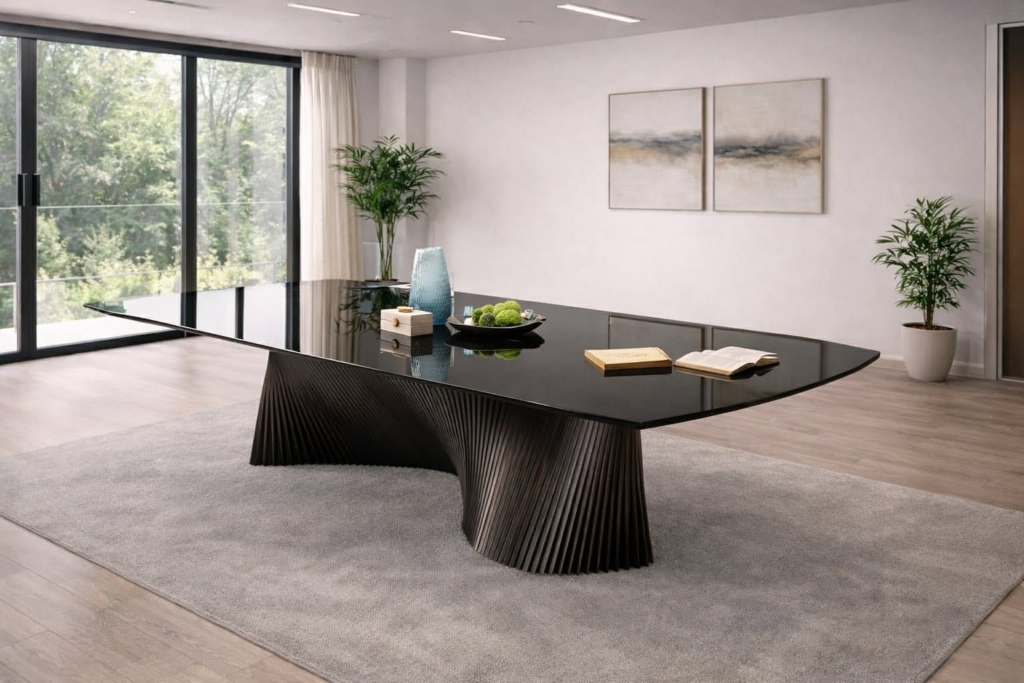
    On glass or a light, airy table, use objects with visual weight, like a heavy stone sculpture or a solid wooden bowl, so the arrangement doesn’t float away.
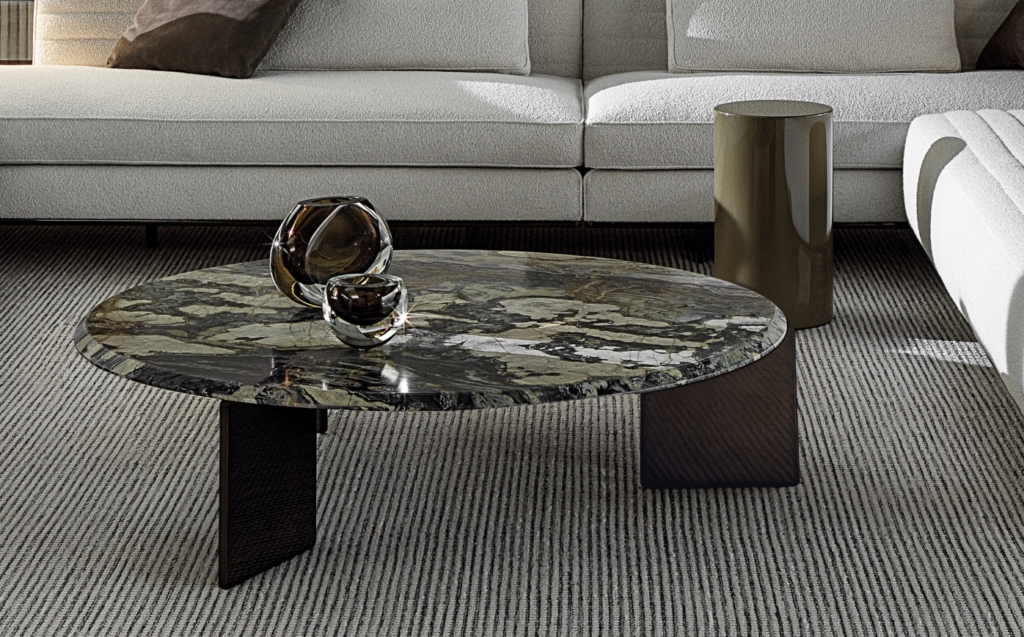
    Keel

    4. Bring in Something Living

    A touch of nature makes any coffee table feel fresh and lived-in. Fresh flowers, a single leafy stem in a slim vase, or a small potted plant all work beautifully.

    In Malaysia, choose plants that cope well indoors with air-conditioning and indirect light, such as a ZZ plant, a small snake plant or a sprig of monstera in water. Orchids are a classic choice too, and they suit both modern and traditional interiors.

    Always set pots and vases on a saucer or tray. Water and soil can leave marks on stone and wood, especially when condensation collects in humid weather.

    5. Make Room for Everyday Life

    A styled table still has to cope with real life. The trick is giving everyday clutter a home of its own.

    • Use a tray. A tray corrals remote controls, coasters and reading glasses into one tidy spot, and it lifts away in seconds when you need the whole surface.
    • Choose a lidded box. A decorative box hides chargers and small items while doubling as part of the display.
    • Keep it child-friendly. If you have young children, swap fragile glass pieces for sturdy ceramics, wood or stone, and keep heavier objects towards the centre of the table.
    • Edit regularly. Once a week, clear away anything that has crept onto the table and doesn’t belong there.

    6. Style for the Festive Seasons

    Your coffee table is the natural place to welcome guests during festive open houses. A few seasonal touches make it feel special without starting from scratch.

    • Chinese New Year: a shallow bowl of mandarin oranges, a red lacquer box for sweets, or a small arrangement of pussy willow or plum blossom.
    • Hari Raya: elegant glass or ceramic jars of kuih raya on a tray, with a few green accents and a sprig of fresh flowers.
    • Deepavali: a cluster of brass or clay lamps in a tray, surrounded by marigolds or a small floral arrangement.
    • Christmas: a low wreath laid flat around a candle, or a bowl of pine cones and ornaments.

    Keep your everyday base, such as the tray and books, in place and swap only a piece or two. When the season ends, the table returns to its usual look in minutes. Place a tray or mat under food, candles and lamps to protect the surface.

    7. Style Around a Large Sectional

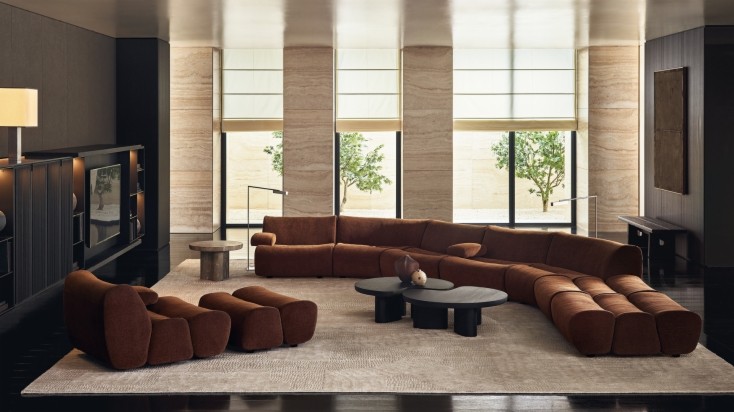
    Generous L-shape and U-shape sofas call for a slightly different approach, because one table rarely reaches every seat.

    Pair two tables. Two coffee tables of different heights or shapes, set close together, cover more ground than a single table. They also create a relaxed, layered look. Style the taller one with your main grouping and keep the lower one clearer for drinks.

    Add side tables at the ends. A small table beside each end seat gives everyone a place for a cup, even if the coffee table is out of reach.

    Scale up the objects. On a large table, small trinkets get lost. Choose fewer, larger pieces, such as an oversized bowl or a substantial stack of books, so the arrangement holds its own against the sofa.

    Browse our sectional sofa collection alongside our coffee tables to see which combinations work together.

    8. Protect the Surface While You Style

    Good styling should never cost you a scratched or stained tabletop.

    • Add felt pads under heavy objects such as stone sculptures, metal bowls and ceramic pots.
    • Use coasters generously. In Malaysia’s humidity, iced drinks gather condensation quickly, and rings can mark wood and stone.
    • Watch out for candles and incense. Place them on a heat-proof tray, and keep them away from wood and lacquered finishes.
    • Keep acidic foods off marble. Fruit, citrus and festive treats are best served on a plate or tray, since acids can leave dull marks on marble.
    • Rearrange occasionally. Moving objects every few months prevents uneven fading where sunlight falls on the table.

    For more on caring for stone surfaces, see our guide to [choosing the right tabletop material: add link once published].

    Find a Coffee Table Worth Styling at Avante Design

    A well-styled coffee table brings personality to the heart of your living room. Start with a table you love, then layer in objects with a mix of heights, textures and meaning, leaving enough space for everyday life.

    Our coffee table collection ranges from the Solid at RM1,794 to the Jeff at RM11,994 on sale, with marble-topped designs such as the Keel in between. Visit our showroom in Bandar Utama, open every day from 10am to 6pm, including public holidays, or chat with an advisor on WhatsApp to find the right table for your sofa.

  • How to Choose the Right Tabletop Material for Your Luxury Dining Table

    How to Choose the Right Tabletop Material for Your Luxury Dining Table

    The tabletop is the part of a dining table you live with most closely. It’s where plates land, glasses sweat, children do homework and festive feasts spread out across every inch. It catches the light from your pendant lamp and sets the tone for the whole room.

    In our guide to choosing the perfect luxury dining table, we looked at shape, size and floor plan, and our guide to choosing the right dining chairs covered the seats around it. This guide turns to the surface itself. It explains how marble, quartzite and other materials differ, and how to choose one that suits the way you cook, eat and entertain.

    1. Know Why the Tabletop Matters Most

    Two tables can share the same shape and size yet feel completely different to live with. The difference is almost always the top.

    The tabletop decides how the table handles daily life. Malaysian cooking is full of ingredients that test a surface, from a squeeze of calamansi and a splash of vinegar to tomato-rich sauces and tamarind. Some stones shrug these off, while others need a little more care.

    The top also shapes the mood of the room. A softly veined marble feels classic and calm, a dramatic quartzite becomes the room’s centrepiece, and a matte surface feels quiet and contemporary. Before you choose, think about both: how the table needs to perform, and how you want it to feel.

    2. Marble: Timeless Beauty That Asks for a Little Care

    Marble has graced dining rooms for centuries, and for good reason. Its soft veining and gentle glow give a table instant elegance, and no two slabs are ever alike.

    What to love. Marble feels cool and smooth to the touch, and it develops a gentle patina with years of use. It suits both classic and modern interiors, from warm walnut tones to minimalist white rooms.

    What to know. Marble is a relatively soft stone, and acids such as lime juice, vinegar or wine can leave dull marks called etching. A good sealant helps resist stains, but it can’t fully prevent etching. Many owners embrace these marks as part of the stone’s character; others prefer a tougher surface.

    To see marble at the heart of a real home, look at our Mayfair Residence project, where the Curve dining table is paired with Sophie Lite chairs, or the Brady dining table in our Banyan Residence project.

    Brady

    3. Quartzite: Natural Drama With Greater Durability

    Quartzite is a natural stone formed when sandstone is transformed by heat and pressure deep underground. The result is a stone that often looks like marble, with sweeping veins and rich colour, but is considerably harder.

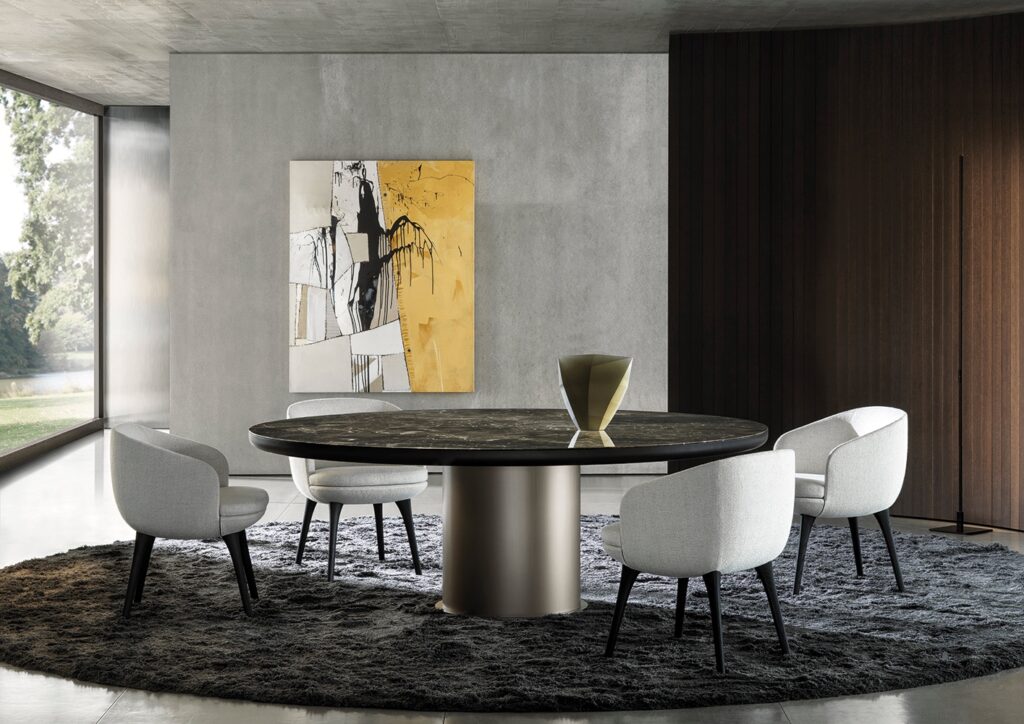
    What to love. True quartzite resists scratches and acidic spills far better than marble, which makes it a reassuring choice for busy family tables. Its patterns are often bold and painterly. Patagonia quartzite, for example, combines creamy tones with dramatic flecks of grey, black and amber.

    What to know. Quartzite is still a natural, slightly porous stone, so it benefits from sealing like marble does. It’s also worth asking whether a stone is true quartzite, because some softer stones are sold under the same name. A trusted retailer will tell you exactly what you’re buying.

    Our Lagos dining table in Patagonia quartzite takes centre stage in our Troika project, while the Wedge table brings quartzite to our Tropicana Aman Suria project.

    Orbit

    4. Compare Natural Stone With Other Surfaces

    While you shop, you’ll also come across man-made and natural alternatives. Each has its place.

    Sintered stone and ceramic are made by fusing minerals at very high temperatures. They resist heat, stains and scratches extremely well and need almost no maintenance. The trade-off is that their pattern is printed or engineered, so it lacks the depth and individuality of a natural slab.

    Engineered quartz blends crushed quartz with resin. It’s consistent and stain-resistant, but the resin means hot pots should never go straight onto it.

    Solid wood and veneer feel warm and inviting, and they suit Japandi and mid-century interiors beautifully. Wood is softer than stone and needs coasters, mats and protection from prolonged sunlight.

    If you’re torn between the look of natural stone and the ease of a manufactured surface, our advisors can show you the options side by side and explain which finishes each table in our dining table collection comes in.

    5. Don’t Forget the Base

    A stone top is heavy, so the base beneath it matters as much for strength as for style.

    Pedestal bases keep the legroom clear, which makes it easier to fit chairs around a round or oval table. Check that a wide pedestal won’t clash with the feet of your dining chairs.

    Leg or trestle bases suit long rectangular tables. Make sure the legs sit far enough in that every seat has comfortable knee space.

    Pairing the materials is where a table comes alive. A warm timber or bronze-toned base softens a cool marble top, while a sleek metal base gives quartzite a gallery-like feel. Also remember that natural stone tops are heavy. Ask about the table’s weight and delivery, especially if your home has stairs or a small lift.

    6. Match the Material to How You Live

    The right tabletop depends less on which stone is “best” than on how your table will be used.

    • If you have young children or eat at the table every day, quartzite or a manufactured surface will stand up to spills, scratches and homework with the least worry.
    • If you host big gatherings for Chinese New Year, Hari Raya or Deepavali, think about the dishes on the table. Lime, sambal and vinegar-based sauces are easier on quartzite than on marble.
    • If your dining room is mainly for entertaining, marble’s softness matters less, and its glow under evening light is hard to beat.
    • If you love a natural, lived-in look, marble’s gentle patina may become part of its charm.
    • If your table sits near a bright window, consider how the colour will look in direct daylight, and protect wooden bases from prolonged sun.

    7. Care for Your Stone Top the Right Way

    A little care keeps a stone table beautiful for decades.

    • Wipe spills promptly, especially citrus, vinegar, wine and coffee. Use a soft cloth with warm water and a mild, pH-neutral cleaner.
    • Avoid harsh cleaners. Bleach, vinegar-based sprays and abrasive pads can dull or scratch the surface.
    • Use coasters and placemats. In Malaysia’s humidity, iced drinks gather condensation quickly, and mats protect the stone from heat, scratches and spills.
    • Never place hot pots directly on the top. Use a trivet, even on heat-tolerant surfaces.
    • Reseal natural stone as advised, typically once or twice a year. A simple test is to drip a little water on the surface: if it no longer beads up, it’s time to reseal.

    Our advisors will explain the care needs of each table before you buy, so there are no surprises later.

    8. See and Touch Before You Buy

    No photograph can capture the way light moves across a slab of stone, or how cool marble feels under your hand. Natural stone also varies from slab to slab, so the table you choose will be one of a kind.

    Our showroom in Bandar Utama is open every day from 10am to 6pm, including public holidays, so you can compare marble, quartzite and other surfaces side by side. Bring a photo of your dining area and your floor plan, and our advisors will help you choose a top, base and chairs that work together. If you’d like to see the full setting before you decide, Avante Bespoke can turn your floor plan into 2D and 3D visualisations.

    Find the Perfect Table at Avante Design

    The right tabletop makes your dining table a place you’re proud to gather around, every day and on every occasion. Whether you’re drawn to the timeless glow of marble on the Brady or Curve, or the bold, hard-wearing beauty of quartzite on the Lagos or Wedge, the best choice balances beauty, practicality and the way you love to dine.

    Explore our full dining table collection, find the right dining chairs to complete the setting, or chat with an advisor on WhatsApp to plan your dining room today.

  • Sectional vs L-Shape vs Modular Sofa: What’s the Difference?

    Sectional vs L-Shape vs Modular Sofa: What’s the Difference?

    A large sofa is where a home gathers. It’s where the family settles in after dinner, where guests linger during festive open houses, and where a lazy Sunday afternoon quietly disappears. It’s also the biggest single piece in most living rooms, so it shapes how the whole space looks and flows.

    Yet shopping for one in Malaysia often starts with confusion. The same sofa might be called a sectional, an L-shape or a modular sofa, sometimes all three at once. This guide explains what each term really means, and how to choose the layout that suits your room and the way you live.

    1. Start With What Each Word Actually Means

    The three terms overlap, but each one describes something different about the sofa.

    Sectional describes how the sofa is built. It’s made from two or more sections that join together, and it can be straight, curved, L-shaped or U-shaped.

    L-shape describes the layout. Two runs of seating meet at a corner, usually with a corner seat or a chaise at one end.

    Modular describes flexibility. The sofa is a set of separate units that you can add, remove and rearrange over time.

    So one sofa can be all three: a modular sectional arranged in an L-shape. Knowing which quality matters most to you is the first step towards the right choice.

    2. Understand the Sectional: Built for Generous Living

    Building a sofa in sections is what makes truly generous seating possible. A sofa made on a single frame becomes hard to build, move and deliver once it grows much beyond three seats. A sectional can stretch to four or five metres and still come apart into pieces that fit through your front door.

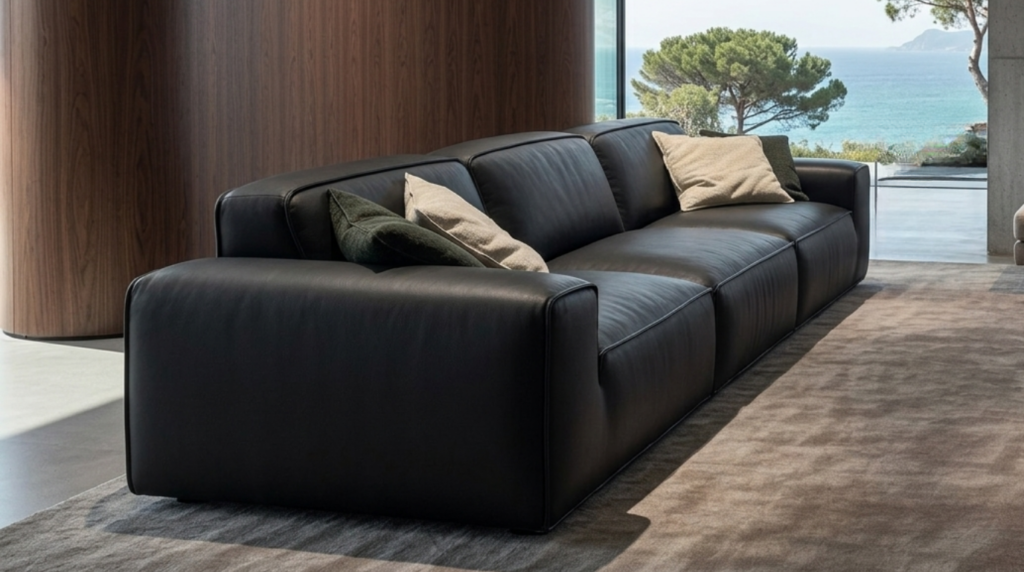
    A sectional doesn’t need to turn a corner. Our Avenue runs to around 388 cm in one long, low line, upholstered in thick Italian aniline leather. Its seat, back and armrest cushions are filled with down feathers, so it feels soft and relaxed from the first sit. Aniline leather also develops a rich patina over time, so the sofa gains character as it ages.

    To see how a long sectional anchors a room, take a look at our Astrea Residence project in Mont Kiara, where the Avenue is styled in black leather.

    Avenue

    3. Know Your L-Shape Options

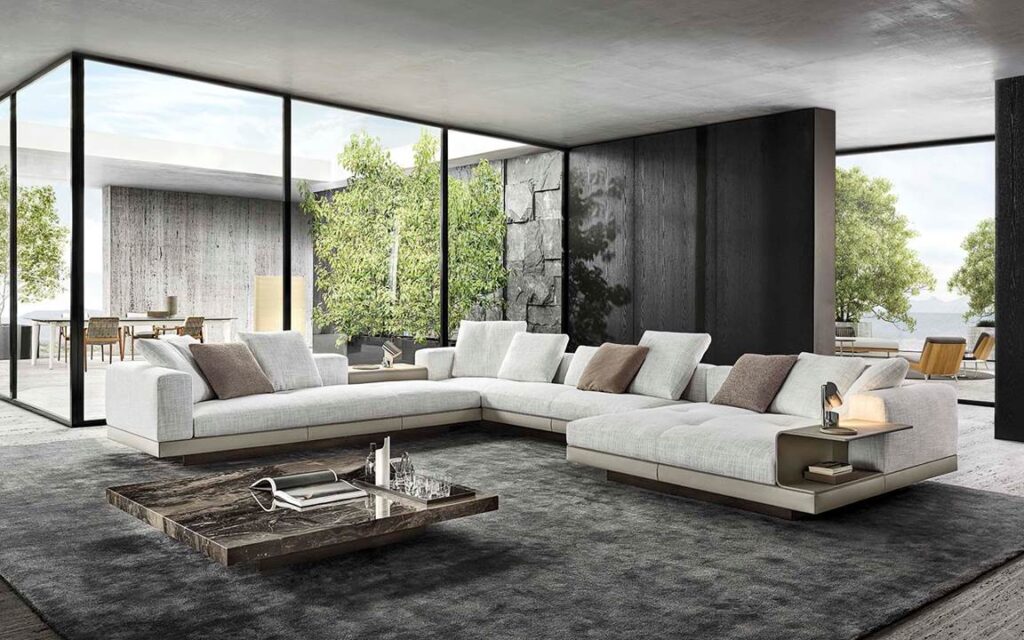
    The L-shape is one of the most popular layouts in Malaysian homes. It tucks neatly into a corner, defines the living area, and gives everyone a clear view of the TV. L-shapes come in two main forms.

    Corner L-shapes join two full rows of seats with a dedicated corner seat. They suit larger households who want everyone sitting comfortably upright.

    Chaise L-shapes pair a straight sofa with an extended chaise at one end. They’re ideal for stretching out with a book, and they often suit smaller living rooms better than a full corner.

    Before you choose, decide which side the corner or chaise should sit on. Stand facing the spot where the sofa will go. If you want the chaise on your left, you need a left-hand-facing layout. Our advisors can show you which layouts each design in our sectional sofa collection comes in.

    4. Decide Whether You Need Modular Flexibility

    A modular sofa is built from independent units, such as armless seats, corners, chaises and ottomans. Each unit stands on its own, so you can turn an L into a U, split one sofa into two facing pieces, or add a seat years later.

    That flexibility suits homes that change over time. Perhaps you’re in a condo now but planning a landed home later, or your family is growing. Modular pieces are also the easiest large sofas to deliver, because no single unit is longer than one or two seats.

    If you prefer a fixed layout with a seamless, tailored look, a sectional that stays in one arrangement may suit you better. Neither is better. It depends on whether you value flexibility or a settled, unchanging composition.

    Connery

    5. Measure Your Room and the Way In

    A large sofa can look smaller in a spacious showroom than it will at home, so measure carefully before you commit.

    • Walkways. Allow about 75 to 90 cm of clear space around the sofa, so people can move through the room comfortably.
    • Coffee table distance. Leave about 40 to 45 cm between the sofa and the coffee table. That’s close enough to reach a cup, with room for your knees.
    • Depth. Sectionals vary in depth. A deeper seat feels more relaxed for lounging, while a shallower one keeps more of the room clear.
    • The route in. Measure the lift car, its door, corridors and any tight turns on the way to your living room. Sectional and modular pieces arrive separately, so the question is whether the largest single piece fits.

    A simple trick is to mark the sofa’s footprint on your floor with masking tape and live with it for a day or two. You’ll quickly see whether the size feels right.

    6. Match the Layout to How You Live

    The best layout depends less on the room’s size than on how you use it day to day.

    • If you host big family gatherings for Chinese New Year, Hari Raya or Deepavali, a generous L or U-shape gives everyone a seat without bringing in extra chairs.
    • If your living and dining areas share one open space, consider floating the sofa in the middle of the room to separate the two zones. Choose a design that’s finished on every side, so the back looks as good as the front.
    • If you’re a household of two or three, a chaise L-shape offers room to stretch out without filling the whole living room.
    • If you love to lounge, look for soft, down-filled cushions, like the Avenue’s, that invite you to sink in.
    • If your plans may change, modular units let your sofa move and grow with you.

    Whichever you choose, think about where the light falls. Keep leather and textile upholstery out of prolonged direct sunlight, which can fade colours over time.

    7. Always Sit Before You Buy

    No photograph can tell you how a sofa feels after a long evening of conversation. Before committing, sit in the corner seat and on the chaise. Lean back, tuck your legs up, and notice whether the seat depth suits your height and whether the cushions hold their shape when you stand up.

    Our showroom in Bandar Utama is open every day from 10am to 6pm, including public holidays, so you can compare leathers, textiles and cushion fills side by side. Bring your floor plan and room measurements, and our advisors will help you work out the right size and layout. If you’d like to see the sofa in your space before you decide, Avante Bespoke can turn your floor plan into 2D and 3D visualisations.

    Find Your Perfect Sofa at Avante Design

    The right large sofa brings a home together. Whether you’re drawn to the long, relaxed line of a sectional like the Avenue, the cosy corner of an L-shape, or the freedom of modular units, the best choice balances your room, your routine and the way you love to unwind.

    Explore our full sectional sofa collection, browse our coffee tables to complete the setting, or chat with an advisor on WhatsApp to plan your living room today.