


The tabletop is the part of a dining table you live with most closely. It’s where plates land, glasses sweat, children do homework and festive feasts spread out across every inch. It catches the light from your pendant lamp and sets the tone for the whole room.
In our guide to choosing the perfect luxury dining table, we looked at shape, size and floor plan, and our guide to choosing the right dining chairs covered the seats around it. This guide turns to the surface itself. It explains how marble, quartzite and other materials differ, and how to choose one that suits the way you cook, eat and entertain.
1. Know Why the Tabletop Matters Most
Two tables can share the same shape and size yet feel completely different to live with. The difference is almost always the top.
The tabletop decides how the table handles daily life. Malaysian cooking is full of ingredients that test a surface, from a squeeze of calamansi and a splash of vinegar to tomato-rich sauces and tamarind. Some stones shrug these off, while others need a little more care.
The top also shapes the mood of the room. A softly veined marble feels classic and calm, a dramatic quartzite becomes the room’s centrepiece, and a matte surface feels quiet and contemporary. Before you choose, think about both: how the table needs to perform, and how you want it to feel.
2. Marble: Timeless Beauty That Asks for a Little Care
Marble has graced dining rooms for centuries, and for good reason. Its soft veining and gentle glow give a table instant elegance, and no two slabs are ever alike.
What to love. Marble feels cool and smooth to the touch, and it develops a gentle patina with years of use. It suits both classic and modern interiors, from warm walnut tones to minimalist white rooms.
What to know. Marble is a relatively soft stone, and acids such as lime juice, vinegar or wine can leave dull marks called etching. A good sealant helps resist stains, but it can’t fully prevent etching. Many owners embrace these marks as part of the stone’s character; others prefer a tougher surface.
To see marble at the heart of a real home, look at our Mayfair Residence project, where the Curve dining table is paired with Sophie Lite chairs, or the Brady dining table in our Banyan Residence project.
3. Quartzite: Natural Drama With Greater Durability
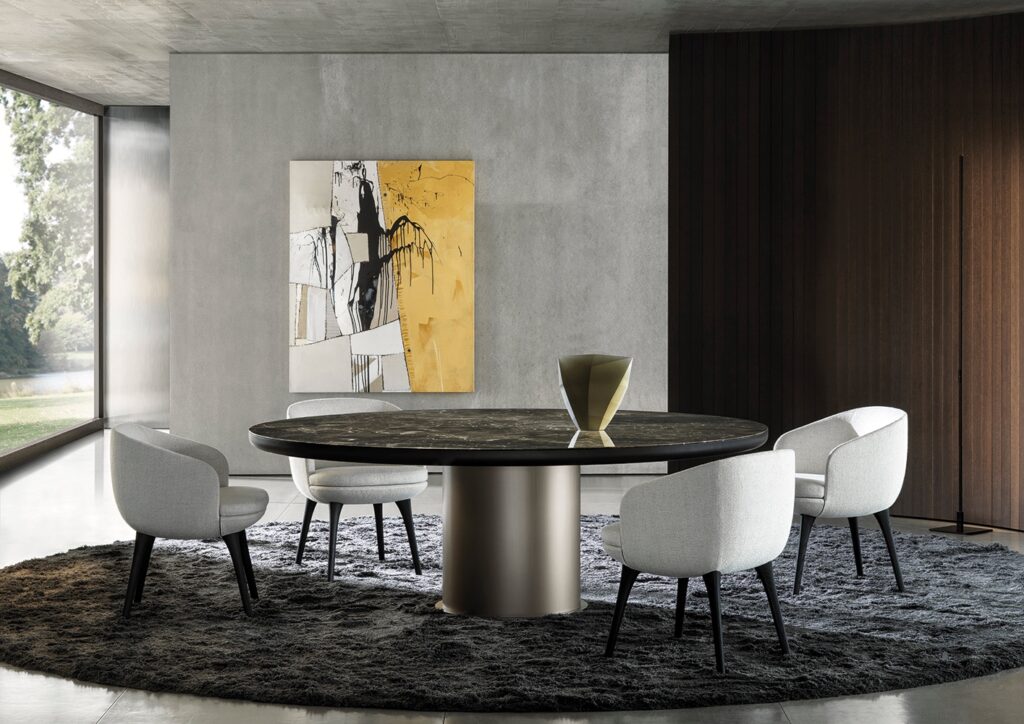
Quartzite is a natural stone formed when sandstone is transformed by heat and pressure deep underground. The result is a stone that often looks like marble, with sweeping veins and rich colour, but is considerably harder.
What to love. True quartzite resists scratches and acidic spills far better than marble, which makes it a reassuring choice for busy family tables. Its patterns are often bold and painterly. Patagonia quartzite, for example, combines creamy tones with dramatic flecks of grey, black and amber.
What to know. Quartzite is still a natural, slightly porous stone, so it benefits from sealing like marble does. It’s also worth asking whether a stone is true quartzite, because some softer stones are sold under the same name. A trusted retailer will tell you exactly what you’re buying.
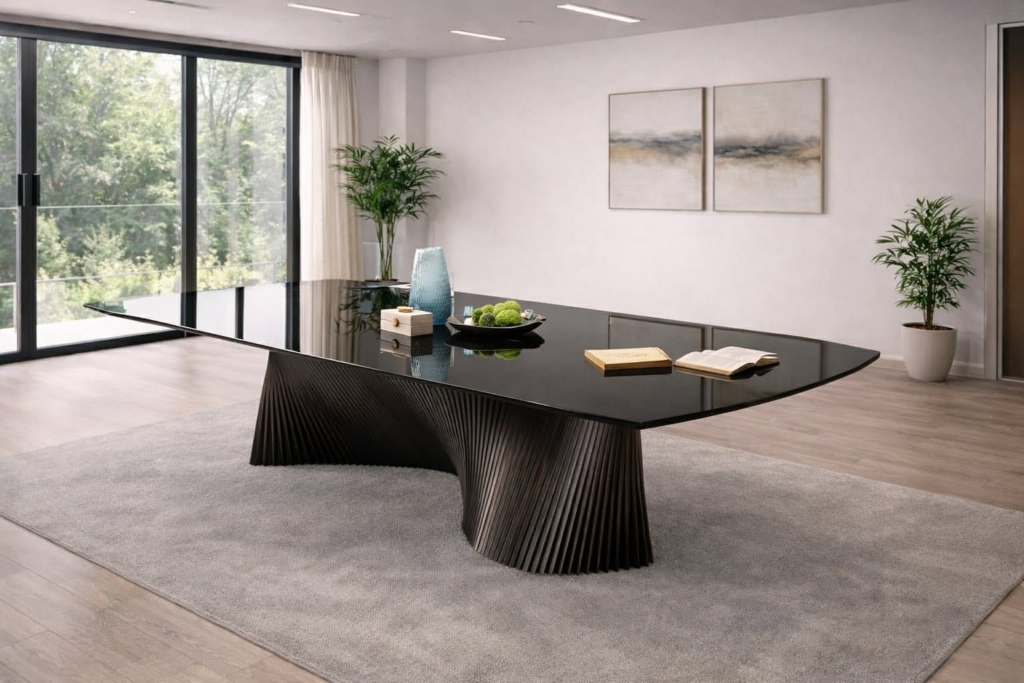
Our Lagos dining table in Patagonia quartzite takes centre stage in our Troika project, while the Wedge table brings quartzite to our Tropicana Aman Suria project.
4. Compare Natural Stone With Other Surfaces
While you shop, you’ll also come across man-made and natural alternatives. Each has its place.
Sintered stone and ceramic are made by fusing minerals at very high temperatures. They resist heat, stains and scratches extremely well and need almost no maintenance. The trade-off is that their pattern is printed or engineered, so it lacks the depth and individuality of a natural slab.
Engineered quartz blends crushed quartz with resin. It’s consistent and stain-resistant, but the resin means hot pots should never go straight onto it.
Solid wood and veneer feel warm and inviting, and they suit Japandi and mid-century interiors beautifully. Wood is softer than stone and needs coasters, mats and protection from prolonged sunlight.
If you’re torn between the look of natural stone and the ease of a manufactured surface, our advisors can show you the options side by side and explain which finishes each table in our dining table collection comes in.
5. Don’t Forget the Base
A stone top is heavy, so the base beneath it matters as much for strength as for style.
Pedestal bases keep the legroom clear, which makes it easier to fit chairs around a round or oval table. Check that a wide pedestal won’t clash with the feet of your dining chairs.
Leg or trestle bases suit long rectangular tables. Make sure the legs sit far enough in that every seat has comfortable knee space.
Pairing the materials is where a table comes alive. A warm timber or bronze-toned base softens a cool marble top, while a sleek metal base gives quartzite a gallery-like feel. Also remember that natural stone tops are heavy. Ask about the table’s weight and delivery, especially if your home has stairs or a small lift.
6. Match the Material to How You Live
The right tabletop depends less on which stone is “best” than on how your table will be used.
- If you have young children or eat at the table every day, quartzite or a manufactured surface will stand up to spills, scratches and homework with the least worry.
- If you host big gatherings for Chinese New Year, Hari Raya or Deepavali, think about the dishes on the table. Lime, sambal and vinegar-based sauces are easier on quartzite than on marble.
- If your dining room is mainly for entertaining, marble’s softness matters less, and its glow under evening light is hard to beat.
- If you love a natural, lived-in look, marble’s gentle patina may become part of its charm.
- If your table sits near a bright window, consider how the colour will look in direct daylight, and protect wooden bases from prolonged sun.
7. Care for Your Stone Top the Right Way
A little care keeps a stone table beautiful for decades.
- Wipe spills promptly, especially citrus, vinegar, wine and coffee. Use a soft cloth with warm water and a mild, pH-neutral cleaner.
- Avoid harsh cleaners. Bleach, vinegar-based sprays and abrasive pads can dull or scratch the surface.
- Use coasters and placemats. In Malaysia’s humidity, iced drinks gather condensation quickly, and mats protect the stone from heat, scratches and spills.
- Never place hot pots directly on the top. Use a trivet, even on heat-tolerant surfaces.
- Reseal natural stone as advised, typically once or twice a year. A simple test is to drip a little water on the surface: if it no longer beads up, it’s time to reseal.
Our advisors will explain the care needs of each table before you buy, so there are no surprises later.
8. See and Touch Before You Buy
No photograph can capture the way light moves across a slab of stone, or how cool marble feels under your hand. Natural stone also varies from slab to slab, so the table you choose will be one of a kind.
Our showroom in Bandar Utama is open every day from 10am to 6pm, including public holidays, so you can compare marble, quartzite and other surfaces side by side. Bring a photo of your dining area and your floor plan, and our advisors will help you choose a top, base and chairs that work together. If you’d like to see the full setting before you decide, Avante Bespoke can turn your floor plan into 2D and 3D visualisations.
Find the Perfect Table at Avante Design
The right tabletop makes your dining table a place you’re proud to gather around, every day and on every occasion. Whether you’re drawn to the timeless glow of marble on the Brady or Curve, or the bold, hard-wearing beauty of quartzite on the Lagos or Wedge, the best choice balances beauty, practicality and the way you love to dine.
Explore our full dining table collection, find the right dining chairs to complete the setting, or chat with an advisor on WhatsApp to plan your dining room today.